What Are Noise-Cancelling Headphones – A Simple Guide
Published: 24 Sep 2026
Noise-cancelling headphones are made to reduce unwanted sounds around you while you listen to music, podcasts, or other audio. They are useful in places like busy streets, offices, airplanes, and crowded rooms where background noise can be distracting.
So, what are noise-cancelling headphones? In simple terms, they are headphones that use special technology to lower outside noise. Many models use Active Noise Cancellation (ANC), which listens to surrounding sounds and helps reduce them before they reach your ears.
They cannot remove every sound or create complete silence, but they can make your listening experience much quieter and more comfortable. This makes them a useful choice for travel, work, study, and everyday listening.
What Are Noise-Cancelling Headphones?
Noise-cancelling headphones are designed to reduce sounds from the surrounding environment. They use built-in microphones and electronic technology to detect outside noise and lower its effect. This can make it easier to focus on your music, videos, calls, or other audio.
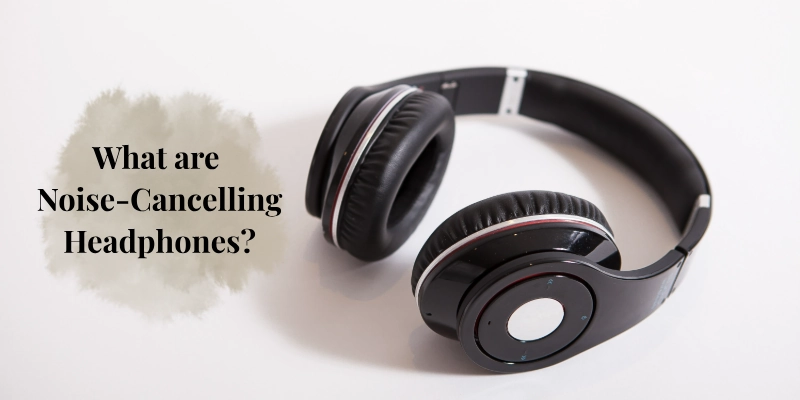
Unlike regular headphones, they do more than play sound into your ears. Many models have Active Noise Cancellation (ANC), which helps reduce unwanted background noise. They also use physical parts, such as padded ear cups or soft ear tips, to block some sound from entering your ears.
Noise cancellation is not the same as turning up the volume. Playing music loudly only covers outside sounds with louder audio, which can be harmful to your hearing over time. Noise reduction works by lowering some of the background noise itself, so you may not need to increase the volume as much.
The best results usually come from using both ANC and physical noise isolation. Together, they can create a quieter listening space, especially in busy places such as airplanes, offices, and public transport.
How Do Noise-Cancelling Headphones Work?
The process may sound complicated, but it is actually easy to understand. These headphones use microphones, a small processor, and speakers to detect and reduce unwanted sounds. Here is how the process works:
Microphones Detect Outside Noise
Small microphones inside and outside the headphones listen to the sounds around you. They can pick up steady sounds such as airplane engines, traffic, fans, and air conditioners.
The Headphones Analyze the Noise
The captured sound is sent to a processor, often called a digital signal processor (DSP). It quickly studies the sound and works out what kind of noise is coming in.
Timing is very important here. The system needs to react quickly so the next step happens at almost the same time as the unwanted sound reaches your ears.
The Headphones Create Anti-Noise
The headphones then create another sound wave that is opposite to the unwanted one. This is called anti-noise.
This process is known as destructive interference. In simple terms, the two opposite sound waves meet and reduce each other’s effect.
The Noise Is Reduced
When the anti-noise meets the unwanted sound, part of that sound becomes less noticeable. This makes the surrounding environment quieter without simply increasing the volume of your music.
Your Music or Audio Continues Normally
At the same time, you can continue listening to music, podcasts, videos, or phone calls. The cancellation system works in the background while your chosen audio plays normally.
The result is a quieter listening environment, especially when you are around steady background sounds.
Active Noise Cancellation vs Passive Noise Isolation
Both methods help make outside sounds less noticeable, but they work in different ways. One uses electronic technology, while the other depends on the physical design of the headphones.
| Feature | Active Noise Cancellation | Passive Noise Isolation |
| How it works | Uses electronic signals to reduce noise | Uses the headphone design to block sound |
| Battery needed | Usually yes | No |
| Best at | Steady background sounds | Physically blocking outside sounds |
| Main components | Microphones, processor, and speakers | Ear cups, padding, or ear tips |
| Example | Headphones with ANC | Closed-back headphones or earphones |
Passive isolation works by creating a physical barrier between your ears and the surrounding environment. A good fit, thick ear cups, and well-sealed ear tips can stop some outside sound from getting through.
ANC takes a different approach by using electronic processing to reduce certain background sounds. It is especially useful for steady sounds that are difficult to block with materials alone.
Many quality headphones use both methods together. The physical design blocks some sound first, while the electronic system handles additional background noise. This combination can provide a quieter and more comfortable listening experience.
What Are the Types of Noise Cancellation?
Noise cancellation can be designed in different ways. The main types are feedforward, feedback, hybrid, and adaptive. Each one uses a slightly different method to handle sounds around you.
Feedforward ANC
Feedforward ANC uses microphones placed on the outside of the headphones. These microphones pick up surrounding sounds before they reach your ears.
Here are some advantages:
- Can respond quickly to outside noise
- Works well with many common background sounds
- Can be adjusted for different environments
Let’s look at some limitations:
- Outside microphones can be affected by wind
- It may not always handle changes in sound perfectly
Feedback ANC
Feedback ANC uses microphones inside the ear cups or earbuds. These microphones monitor the sound that actually reaches your ears.
Here are some advantages:
- Can check the result directly inside the headphones
- Can adjust the cancellation based on what you hear
- Useful for controlling the final sound more closely
Let’s look at some limitations:
- It may have a narrower range of sounds it can handle well
- Poor tuning can affect the audio quality
Hybrid ANC
Hybrid ANC combines feedforward and feedback designs. It uses microphones both outside and inside the headphones.
This gives the system information about the noise around you and the sound reaching your ears. Because it uses both approaches, hybrid designs can provide more balanced noise reduction across different situations.
Adaptive Noise Cancellation
Adaptive noise cancellation can change its level based on the environment. Instead of using one fixed setting, the headphones adjust their response as surrounding sounds change.
For example, they may behave differently in a quiet room than they do on a busy train. This can make the listening experience more comfortable when you move between different places.
The main difference is simple: feedforward uses outside microphones, feedback uses inside microphones, hybrid combines both, and adaptive systems adjust their response to changing conditions.
What Sounds Do Noise-Cancelling Headphones Block Best?
The amount of noise reduced depends on the type of sound. These headphones usually work better with sounds that are steady and continue for a long time. Sudden or changing sounds are harder to reduce.
Sounds They Handle Well
They are generally good at reducing low and steady background sounds, such as:
- Airplane engine hum
- Bus and train noise
- Road noise
- Air conditioners
- Fans
- General office noise
These sounds are easier to handle because they often stay similar for a longer period. The system has more time to detect their pattern and respond to them.
Sounds They Do Not Block Completely
Some sounds can still be heard, especially when they are sudden, sharp, or change quickly. These include:
- Human voices
- Babies crying
- Dogs barking
- Sudden claps
- Alarms
- Sharp or high-pitched sounds
The main reason is that ANC works best when it can predict and respond to a sound. A constant low-frequency hum is fairly predictable, while a sudden voice, bark, or alarm can change too quickly.
This does not mean these sounds cannot be reduced at all. The headphones may make them quieter, but they are unlikely to remove them completely. Physical ear cups or ear tips can provide extra isolation and help reduce some of the remaining noise.
Benefits of Noise-Cancelling Headphones
These headphones can be useful in many everyday situations. Their main advantage is making it easier to listen or concentrate when there is unwanted sound around you.
- Reducing background noise can make it easier to concentrate on a task. This can be helpful when reading, studying, working, or using a computer in a busy place.
- Less background noise means you can hear your audio more clearly. Details in music, podcasts, and videos may be easier to notice without competing sounds around you.
- Long trips can be tiring when you are surrounded by engine or road noise. Reducing these steady sounds can make flights, train rides, and bus journeys more comfortable.
- Everyday sounds such as fans, traffic, or nearby activity can interrupt your attention. Lowering these distractions can help create a quieter personal space.
- People who work or study in shared spaces can use them to create a more focused listening environment. They can be especially useful in offices, libraries, cafes, or other places where complete silence is not possible.
- When there is less background noise competing with your audio, you may not feel the need to turn the volume up as much. Keeping the volume at a comfortable level is still important, especially during long listening sessions.
Limitations of Noise-Cancelling Headphones
While these headphones can make listening more comfortable, they also have some limitations. Knowing them can help you understand what to expect before buying a pair.
- Some outside noise will still be noticeable, especially voices and sudden sounds.
- The technology is generally better at reducing steady, low-frequency sounds than changing or high-pitched ones.
- A clap, shout, bark, or alarm may pass through because it can change too quickly for the system to reduce effectively.
- Models with advanced noise-reduction features, better microphones, and stronger hardware often have a higher price than basic headphones.
- The electronic noise-reduction system normally uses battery power. When the battery runs out, this feature may stop working.
- Certain users may feel pressure or discomfort when the feature is turned on. This experience can vary from person to person.
- Strong wind may reach the outside microphones and interfere with the system, especially when using headphones outdoors.
- Loose ear cups or poorly fitted ear tips can let more outside sound in. A proper seal can improve both isolation and overall listening quality.
Do Noise-Cancelling Headphones Work Without Music?
Yes, noise-cancelling headphones can reduce outside noise even when no music or other audio is playing. The noise-cancelling feature works separately from the audio you choose to listen to.
When ANC is turned on, the headphones use their microphones and internal electronics to detect surrounding sounds and reduce them. This means you can wear them in a noisy place without playing any music at all.
It is important to understand that ANC does not simply cover outside noise with louder music. Turning up music only makes the audio louder than the sounds around you. ANC works differently by reducing certain unwanted sounds before or as they reach your ears.
For example, you can sit on a plane with your headphones on and no music playing. The steady engine noise may sound quieter with ANC enabled, even though the headphones are not playing any music.
Do Noise-Cancelling Headphones Need a Battery?
Yes, active noise cancellation needs power to work. The microphones and electronic system that reduce outside sounds need electricity from a battery or another power source.
If the battery runs out, the active noise-cancelling feature will usually stop working. On some models, you may still be able to listen to audio, while others may stop working completely depending on their design.
The good thing is that the physical parts of the headphones can still provide some noise isolation. Ear cups and ear tips create a barrier that blocks part of the outside sound even when ANC is turned off.
Wired vs Wireless Considerations
Wireless models normally use a built-in rechargeable battery for both Bluetooth and active noise cancellation. Wired models can sometimes play audio without a battery, but their ANC feature may still need separate power.
Before buying, check how the headphones behave when the battery is empty. A model that supports wired listening without power can be more convenient for long trips or situations where charging is not easy.
Are Noise-Cancelling Headphones Safe?
Yes, they are generally safe when used at a reasonable volume. ANC does not mean you should turn the volume up. In fact, reducing background noise may help you enjoy audio at a lower volume.
Take breaks during long listening sessions to give your ears some rest.
When walking or cycling, stay aware of your surroundings. Traffic, horns, alarms, and other important sounds may be harder to notice with noise reduction turned on.
Where Can You Use Noise-Cancelling Headphones?
These headphones can be useful in many places where background sounds make it harder to focus or enjoy your audio.
- On Airplanes:
They can reduce the steady engine noise during a flight, making music, movies, or podcasts easier to enjoy. - While Commuting: They are useful on buses, trains, and other forms of public transport where road and vehicle noise can be distracting.
- At Work: They can help create a quieter environment in busy offices, especially when you need to focus on a task.
- While Studying: Students can use them to reduce common background sounds and create a more focused study space.
- In Cafes: They can make it easier to concentrate or enjoy audio when people are talking and other sounds are present.
- At Home: They can be useful when you want to focus while family members, appliances, or other activities create background noise.
- During Travel: Whether you are on a train, bus, or waiting at a busy terminal, they can make long journeys more comfortable and less distracting.
Noise-Cancelling Headphones vs Regular Headphones
Both types can play music, podcasts, and other audio, but they differ in how they handle the sounds around you.
| Feature | Noise-Cancelling Headphones | Regular Headphones |
| Noise reduction | Actively reduces certain outside sounds | Mainly relies on physical isolation |
| Technology | May use microphones, processing, and ANC | Uses basic speakers and headphone design |
| Battery | ANC usually needs battery power | Usually does not need power for wired use |
| Sound experience | Can make audio easier to hear in noisy places | Works well in quieter environments |
| Price | Usually more expensive | Often more affordable |
| Best use cases | Travel, commuting, work, and busy places | Home, casual listening, and quiet spaces |
| Comfort | Can be comfortable but may feel different with ANC on | Usually provides a more familiar listening experience |
The better choice depends on where and how you plan to use your headphones. If you often listen in noisy places, the extra noise-reduction features may be useful. For quiet environments, regular headphones may be all you need.
How to Choose Noise-Cancelling Headphones
Choosing the right pair depends on where you will use them and which features matter most to you. Consider these points before buying.
- ANC Performance
Look for a model that can reduce the types of noise you deal with most often. If you travel frequently, strong performance against steady engine and road noise can be useful.
- Comfort and Fit
Check the weight, ear cup padding, headband, and overall fit. A comfortable pair is especially important if you plan to wear it for several hours.
- Battery Life
Check how long the headphones can run on one charge. Also see how quickly they recharge and whether they can still be used when the battery is empty.
- Sound Quality
Good noise reduction is not enough if the audio sounds poor. Look for clear vocals, balanced music, and sound that suits your listening preferences.
- Transparency or Ambient Mode
This feature lets outside sounds pass through without removing your headphones. It can be useful when you need to hear announcements or talk to someone.
- Wireless Connectivity
Bluetooth makes it easy to connect to smartphones, tablets, and laptops without cables. Check the connection range and whether the headphones support the devices you use.
- Microphone Quality
If you take calls or join online meetings, choose a model with a good microphone. Clear voice pickup can make conversations easier in busy places.
- Budget
Set a budget before comparing models. More expensive headphones may offer better features, but a higher price does not always mean they are the best choice for you.
- Right Headphone Design
Over-ear models usually provide more coverage, while on-ear and in-ear options can be smaller and easier to carry. Choose the design that fits your comfort and daily use.
Are Noise-Cancelling Headphones Worth It?
Whether they are worth the money depends on your daily needs and where you usually listen.
Frequent Travelers
They can be a good investment for people who often travel by plane, train, or bus. Reducing constant travel noise can make long journeys more comfortable.
Students
Students may find them useful when studying in libraries, shared rooms, or other places where background sounds can interrupt concentration.
Office Workers
They can be helpful in busy offices where conversations, equipment, and other activity make it harder to focus.
People Who Commute
If you travel to work or school regularly, they can make bus and train journeys quieter and more enjoyable.
Music and Podcast Listeners
They can improve the listening experience by reducing competing sounds, allowing you to hear your content more clearly.
People Who Mainly Use Headphones in Quiet Rooms
If you mostly listen at home or in other quiet places, you may not need to pay extra for advanced noise-reduction features.
When Are Regular Headphones Enough?
Regular headphones may be the better choice if you rarely deal with background noise, have a limited budget, or mainly want headphones for simple music, videos, or calls. In quiet environments, the extra features may not provide enough value to justify the higher price.
Overall, they are most worthwhile for people who regularly use headphones in noisy environments. For quiet spaces and basic listening, regular headphones can be a practical choice.
Common Myths About Noise-Cancelling Headphones
There are several common misunderstandings about how noise cancellation works. Here are some important facts to keep in mind.
Myth 1: ANC Blocks All Outside Sound
Fact: ANC does not remove every sound. It is better at reducing steady background noise, while voices, sudden sounds, and other changing noises may still be heard.
Myth 2: ANC Makes the Headphones Completely Silent
Fact: ANC can make your surroundings quieter, but it does not normally create complete silence. You may still notice some background sounds.
Myth 3: ANC Works Equally Well With Every Sound
Fact: Different sounds are handled differently. Constant low-frequency noise is generally easier to reduce than sudden or high-pitched sounds.
Myth 4: More Expensive ANC Always Means Better Headphones
Fact: Price is only one factor. Comfort, sound quality, battery life, fit, microphone quality, and other features also affect the overall experience.
Myth 5: ANC Means You Can Safely Increase the Volume
Fact: Noise reduction does not make loud listening safe. Keep the volume at a comfortable level, even when background noise has been reduced.
Final Thoughts
Noise-cancelling headphones use technology to reduce unwanted sounds and make listening more comfortable. However, they cannot remove every sound around you.
For the best experience, choose a comfortable fit, make sure the ear cups or tips seal well, and keep the listening volume at a safe level.
If you often travel, commute, study, or work in noisy places, they can be a useful choice. If you mostly listen in quiet rooms, regular headphones may be enough.
FAQs
Need a quick answer about noise-cancelling headphones? Check the FAQs above for simple guidance before making your choice.
They are headphones designed to reduce unwanted sounds around you. Some use electronic noise cancellation, while others mainly depend on their physical design.
They detect certain surrounding sounds and use technology to reduce their effect. The result is a quieter listening environment.
ANC stands for Active Noise Cancellation. It is an electronic feature that helps reduce unwanted background sounds.
No. They can reduce many background sounds, but some voices, sudden noises, and other sounds may still be heard.
Yes. The cancellation feature can work even when no music or other audio is playing.
Active cancellation needs power to operate. Some models can still provide passive sound isolation or wired audio when the battery is empty.
ANC uses electronic processing to reduce certain sounds, while noise isolation comes from the physical seal created by ear cups or ear tips.
They are generally safe when used responsibly. Keep the volume at a comfortable level and take breaks during long listening sessions.
They can be useful for students who study in places with distracting background sounds. Their usefulness depends on the environment and the person’s preference.
Yes, they can be particularly useful during flights because they can reduce the steady sounds produced by the aircraft.
They may reduce voices to some degree, but speech is usually more difficult to cancel than steady background sounds. A good physical seal can provide additional reduction.
They can be worth buying if you regularly use headphones in noisy places. If you mostly listen in quiet rooms, a regular pair may provide everything you need.





- Be Respectful
- Stay Relevant
- Stay Positive
- True Feedback
- Encourage Discussion
- Avoid Spamming
- No Fake News
- Don't Copy-Paste
- No Personal Attacks
- Be Respectful
- Stay Relevant
- Stay Positive
- True Feedback
- Encourage Discussion
- Avoid Spamming
- No Fake News
- Don't Copy-Paste
- No Personal Attacks
