What is Smart Technology – An Easy Guide for Beginners
Published: 13 Dec 2025
Have you ever wondered how your phone knows your face, or how lights turn on by themselves in some homes? What makes these devices so quick and helpful? Many people ask, What is smart technology, and why is it everywhere today?
These modern tools are designed to understand simple commands, learn from use, and make daily tasks easier for people. From homes and schools to offices and hospitals, such systems are quietly changing the way we live and work by saving time, reducing effort, and making life more comfortable.
What is Smart Technology?
Smart technology means devices and systems that can understand information, learn from it, and respond on their own. These tools use data, sensors, and the internet to work better and make simple decisions.

Because of this, they help people complete daily tasks with less effort and more ease.
- It can collect information from its surroundings.
- It can respond automatically without human help.
- It improves its performance over time.
- It connects with other devices through the internet.
- It helps save time and reduces manual work.
What Makes Technology “Smart”?
Technology becomes “smart” when it can work on its own and react to situations without constant human help. Some key features give it this ability.
- Internet connection: It allows devices to send and receive information in real time and work from anywhere.
- Sensors: These help devices notice changes like light, motion, sound, or temperature.
- Automation: It lets systems perform tasks automatically without repeated instructions.
- Artificial intelligence: At a basic level, it helps systems learn from data and make simple decisions over time.
Together, these features create a seamless experience, making modern gadgets more convenient, efficient, and connected than ever before.
How Smart Technology Works?
Smart technology works in a simple three-step process that anyone can understand. It takes information from the environment, thinks about it, and then acts in a helpful way.
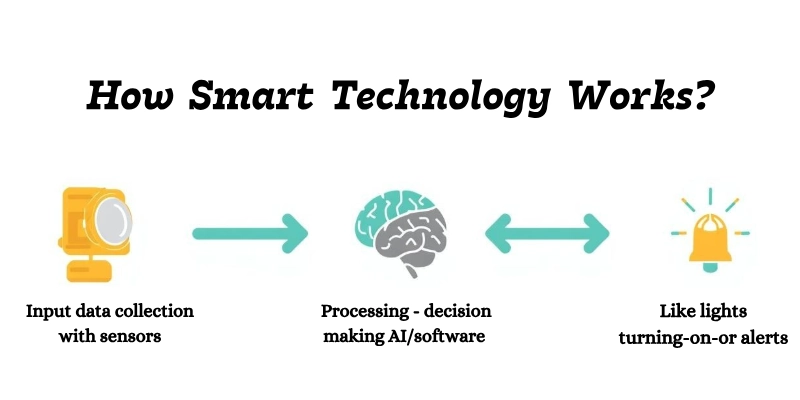
This process happens quickly and automatically, making devices feel intelligent and easy to use in everyday life.
- Input – Data Collection:
Sensors collect information from the surroundings, such as touch, voice, motion, or temperature. This is how the device knows what is happening around it. - Processing – Smart Decision Making:
The device uses software or basic AI to analyze the data and decide what to do next. This step is like thinking before acting. - Output – Action or Response:
After processing, the device performs an action, like turning on lights, sending alerts, or displaying results.
Example:
A smart bulb senses darkness → turns on automatically. This shows exactly how input, processing, and output work together in real life, making daily tasks easier and more comfortable.
Examples of Smart Technology in Daily Life
Smart technology is becoming part of everyday life, making tasks easier and faster. Here are some common examples:
- Smart Home Devices
Smart lights, fans, and plugs can turn on or off automatically and be controlled remotely, saving time and energy. - Smart Phones and Wearables
Smartphones, smartwatches, and fitness bands track health, reminders, and notifications to keep life organized. - Smart Appliances
Smart TVs, refrigerators, and washing machines perform tasks automatically and adjust settings for convenience. - Smart Assistants
Voice assistants like Alexa, Google Assistant, and Siri respond to commands, control devices, and provide information quickly.
These examples show how smart systems make daily life more convenient and efficient.
Types of Smart Technology
Smart technology comes in different forms, helping people in various areas of life. It can make homes, work, health, and travel easier and more efficient. These systems learn from use and respond automatically, improving daily routines without extra effort.
- Smart Home Technology:
Devices like smart lights, plugs, and thermostats make homes more convenient and energy-efficient. - Smart Health Technology:
Fitness trackers and health monitoring devices help track activity, heart rate, and overall wellness. - Smart Education Technology:
Online learning tools and smart boards make learning interactive and easy for students and teachers. - Smart Transportation Technology:
GPS systems and smart cars make travel safer, faster, and more efficient.
These types show how smart systems are improving different parts of daily life.
Key Features of Smart Technology
Smart technology is useful because it has several features that make life easier and more efficient. Understanding these key points helps explain the features of smart technology.
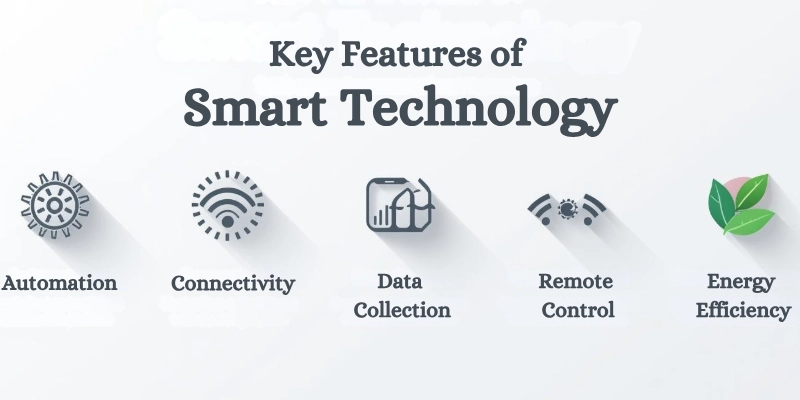
- Automation
Devices can perform tasks automatically without constant human input, saving time and effort. - Connectivity
Smart systems connect to the internet and other devices, allowing easy communication and control. - Data Collection
They gather information from their surroundings, such as temperature, motion, or usage patterns, to work smarter. - Remote Control
Users can manage devices from anywhere using apps or voice commands, adding convenience. - Energy Efficiency
Smart technology helps reduce energy use by optimizing device performance and turning off when not needed.
These features combine to make smart systems more helpful, practical, and beneficial in daily life.
Advantages and Disadvantages of Smart Technology
Smart technology brings many benefits but also has some limitations. The table below shows a simple comparison:
| Benefits | Drawbacks |
| Makes life easier and more convenient | It can be expensive to buy and maintain |
| Saves time by automating tasks | Requires an internet connection for many devices |
| Reduces manual work | May have privacy or security concerns |
| Improves efficiency at home, work, and school | It can be difficult to set up for beginners |
| Offers better energy management | Dependence on devices may increase |
Tips for Beginners Using Smart Technology
Using smart systems can be easy if you follow some simple steps. These tips help beginners get started safely and enjoy the benefits without confusion.
- Begin with a single device, like a smart bulb or smartwatch, to learn how it works before adding more.
- Choose devices from reliable brands to ensure quality, safety, and good customer support.
- Regular updates improve performance, add features, and protect against security issues.
- Use strong passwords and secure your network to keep your smart devices safe from hackers.
- Take time to understand device settings, controls, and shortcuts to use them efficiently.
Following these tips helps beginners enjoy smart systems safely and comfortably, making daily life easier and more convenient.
Future of Smart Technology
The future of smart systems looks exciting, with more devices using artificial intelligence to learn and make decisions on their own. Homes and cities will become smarter, with connected systems that save energy, improve convenience, and make daily life smoother.

We can also expect better security systems that protect people and property more effectively. In healthcare, smart tools will help monitor health, provide reminders, and assist doctors in giving faster, more accurate care. Overall, these advancements will make life safer, easier, and more efficient for everyone.
Conclusion
Smart technology is making daily life easier and more convenient. From homes to health and transportation, it helps save time and effort. By using devices safely and understanding their features, we can enjoy their benefits while improving our everyday lives.
Try smart technology today! Share your thoughts or questions in the comments below.
FAQs
Have questions about smart technology? See our FAQs and share yours in the comments!
Smart technology refers to devices that can think, learn, and act automatically. It saves time, reduces effort, and makes life more convenient. It can also improve safety and efficiency in daily tasks.
Not exactly. AI is a part of smart tech that allows devices to learn and make decisions. Smart systems can work with or without AI.
It is called smart because it can respond, learn, and perform tasks automatically. It goes beyond simple machines. It makes everyday life easier and faster.
Smart tech was developed by many engineers and companies over time. There is no single inventor. It evolved gradually with advances in computing, sensors, and connectivity.
SMART Technologies is a company that specializes in interactive displays and educational tools. It was founded in Canada. The company is now part of larger technology groups.
Early smart home devices included automated thermostats and security systems. They could perform simple tasks like controlling temperature or alarms. These devices laid the foundation for modern smart homes.
Smart buildings save energy and reduce costs. They improve safety and comfort for occupants. They also allow easier monitoring and control of systems.
It makes daily tasks faster and easier. It increases efficiency at home, work, and school. It also helps people make better decisions using data.
Technology provides instant access to information and learning tools. It helps people organize and manage tasks efficiently. It also encourages problem-solving and creativity.
Future smart systems may include fully automated cities and advanced AI assistants. Homes, transport, and healthcare will be more connected and intelligent. Life is expected to be faster, safer, and more efficient.





- Be Respectful
- Stay Relevant
- Stay Positive
- True Feedback
- Encourage Discussion
- Avoid Spamming
- No Fake News
- Don't Copy-Paste
- No Personal Attacks
- Be Respectful
- Stay Relevant
- Stay Positive
- True Feedback
- Encourage Discussion
- Avoid Spamming
- No Fake News
- Don't Copy-Paste
- No Personal Attacks
