What is a Smart Scale? Features, Uses & Benefits Guide
Published: 24 May 2026
Have you ever wondered how one weighing machine can do more than just show your weight? Today, many people use smart health gadgets to track their fitness and daily habits. One popular device is the what is a smart scale? It not only measures body weight but can also provide helpful health information like body fat, muscle mass, and more.
As fitness and wellness become more important, these modern scales are becoming common in homes, gyms, and health routines. They help people understand their bodies better and stay motivated toward their health goals.
In this guide, you will learn what this device is, how it works, its main features, benefits, and why so many people are adding it to their daily lifestyle.
What is a Smart Scale?
It is a digital weighing device that does more than just measure body weight. It uses smart technology to connect with mobile apps, fitness trackers, or other health devices through Bluetooth or Wi-Fi. This helps users keep track of their health information easily over time.
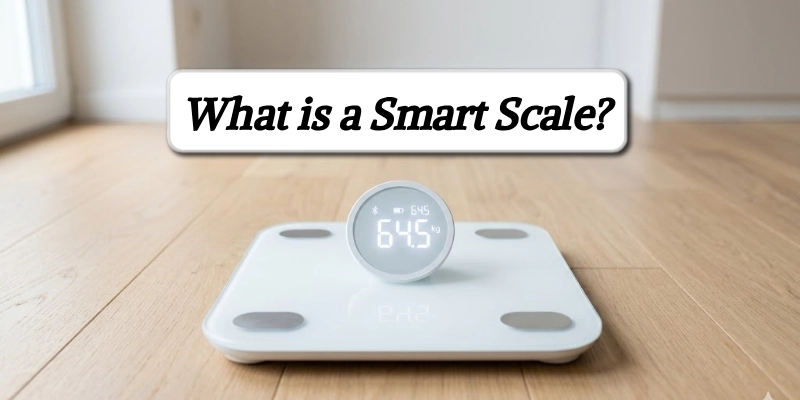
Unlike traditional weighing machines, it can measure different body metrics besides weight. These may include body fat percentage, muscle mass, body water, BMI, bone mass, and more. The data is usually shown on a smartphone app, making it simple to monitor fitness and wellness progress.
Because of these advanced features, many people use smart scales to better understand their overall health and support their fitness goals.
How Does a Smart Scale Work?
It uses digital sensors and connected technology to measure body weight and other body details. It can also sync data with mobile apps, helping users track their fitness progress easily over time.
- Weight Measurement Technology
The device uses built-in sensors to detect pressure and calculate body weight. The result appears on the digital screen within seconds.
- Bioelectrical Impedance Analysis (BIA)
Some models use a weak electrical signal to estimate body composition. This helps measure body fat, muscle mass, body water, and similar health data.
- Wireless Connectivity
Bluetooth and Wi-Fi allow the scale to connect with smartphones and fitness apps. This makes data syncing quick and simple.
- Mobile App Integration
The mobile app stores health information and shows progress through charts and reports. Users can track daily or monthly fitness changes easily.
- Cloud Data Storage
Many apps save data online through cloud storage. This helps users keep long-term fitness records safe and accessible anytime.
Key Features of a Smart Scale
Modern smart scales include several useful features that help users track their health and fitness more easily. These features provide more details than regular weighing machines.
- Weight Tracking:
The device provides accurate digital weight measurements and helps users monitor weight changes over time. - Body Fat Percentage:
It can estimate body fat levels to give a better understanding of overall body composition. - BMI Calculation:
Many models calculate Body Mass Index (BMI) using height and weight data to support fitness tracking. - Muscle Mass & Water Percentage:
Some scales also measure muscle mass and body water percentage for additional health insights. - App Connectivity:
The scale can sync with fitness apps, smartphones, and wearable devices through Bluetooth or Wi-Fi. - Multi-User Support:
Many devices support multiple user profiles, making them suitable for families or shared use.
Types of Smart Scales
Different types of smart scales are designed for different health and fitness needs. Some focus on basic tracking, while others provide advanced body measurements and app features.
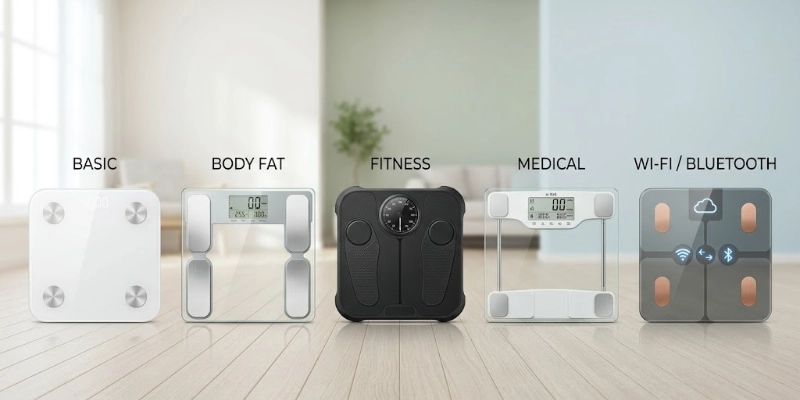
Here are some types given below.
- Basic Smart Scales:
These models mainly track body weight and BMI. They are simple, easy to use, and suitable for everyday weight monitoring.
- Body Composition Smart Scales:
These devices provide advanced health measurements such as body fat percentage, muscle mass, body water, and bone mass.
- Fitness-Focused Smart Scales:
Fitness-focused models connect with workout apps and fitness trackers. They help users monitor progress alongside exercise routines and health goals.
- Medical Smart Scales:
These scales offer professional-level monitoring features and more detailed body data. They are often used for health tracking and wellness programs.
- Wi-Fi vs Bluetooth Smart Scales:
Bluetooth models connect directly to nearby smartphones, while Wi-Fi models can sync data automatically through the internet. Wi-Fi usually offers easier long-term data updates, while Bluetooth is simpler for personal use.
Benefits and Drawbacks
It can make health and fitness tracking easier at home. It helps users monitor body changes, stay motivated, and manage wellness goals more effectively.
| Benefits | Limitations |
| Easy weight tracking | Results may vary sometimes |
| Helps manage fitness goals | Needs app setup |
| Tracks progress over time | Battery required |
| Connects with fitness apps | More costly than regular scales |
| Gives extra body data | Accuracy differs by brand |
Common Uses of Smart Scales
Smart scales are used by many people to monitor daily health and fitness progress. They help users understand body changes and maintain long-term wellness habits.
- Many people use smart scales to track weight loss progress over time.
- Fitness enthusiasts and bodybuilders use them to monitor body changes and workout results.
- These devices help users keep track of personal health and fitness goals.
- Families can use multiple profiles to manage health records in one device.
- Smart scales also help track long-term wellness and body trends more easily.
Smart Scale vs Regular Scale
Both smart scales and regular scales are used to measure body weight, but they offer different features and functions. The right choice depends on a person’s health needs, fitness goals, and budget.
| Smart Scale | Regular Scale |
| Tracks body data | Shows weight only |
| Connects with apps | No connectivity |
| Stores progress | No data storage |
| More health features | Basic use |
| Higher price | Lower price |
How to Choose the Best Smart Scale?
Choosing the right smart scale depends on your health needs, features, and budget. A good device should be easy to use, accurate, and compatible with your daily fitness routine.
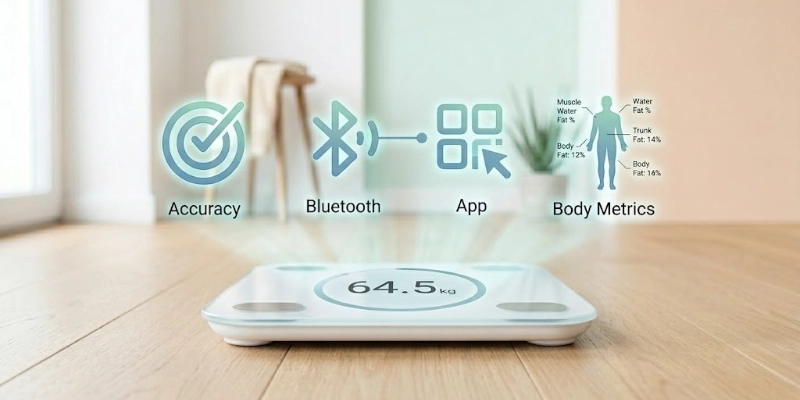
Let’s look at the following points to choose the best scales.
- Measurement Features:
Choose a model that provides the body measurements you want, such as weight, body fat, BMI, or muscle mass. - Accuracy and Sensors:
Look for high-quality sensors that provide stable and accurate readings. Reliable measurements are important for tracking progress. - App Compatibility:
Make sure the scale works well with your smartphone and preferred fitness apps. - Connectivity Options:
Check whether the device supports Bluetooth, Wi-Fi, or both for easy data syncing. - Design and Display:
Pick a scale with a clear display and a simple design that fits your space and comfort. - Budget and Brand Reputation:
Compare prices, features, and trusted brands before buying. A reliable brand often provides better quality and support.
Popular Smart Scale Brands
Many companies offer smart scales with different features, designs, and price ranges. Some brands focus on fitness tracking, while others provide advanced health monitoring features.
- Fitbit is known for fitness-focused devices and app integration.
- Withings offers advanced body measurement and health tracking features.
- Eufy provides user-friendly scales with simple mobile app support.
- Garmin focuses on fitness and wellness tracking for active users.
- RENPHO is popular for affordable scales with multiple body measurements.
- Xiaomi offers budget-friendly smart scales with modern features.
Tips for Using a Smart Scale Correctly
Using a smart scale properly can help improve measurement accuracy and make health tracking more reliable. Simple daily habits can also provide better long-term results.
- Place the scale on a flat and hard surface for accurate readings.
- Try to measure your weight at the same time each day.
- Keep your feet clean and dry before standing on the device.
- Do not depend only on body fat readings for overall health decisions.
- Sync your data regularly with the mobile app to keep records updated.
Privacy & Security Concerns
Smart scales collect personal health information, so privacy and data security are important factors to consider. Users should understand how their data is stored and shared.
- Personal health data is often saved in mobile apps or cloud storage systems.
- Some apps may require permissions for Bluetooth, Wi-Fi, or account access to sync data properly.
- Choosing trusted brands can help improve data protection and account security.
Conclusion
Smart scales are helpful devices for tracking weight, fitness, and overall health more easily. They provide extra body measurements, app connectivity, and progress tracking features that make daily health monitoring more convenient.
For people focused on fitness and wellness, these devices can support better health habits and long-term goal tracking. Choosing the right model can make managing personal health simpler and more effective.
FAQs
Check the FAQs below to learn more about their features.
It is used to measure body weight and track health data. It also shows extra details like BMI and body fat. People use it for daily fitness tracking.
They are accurate for basic weight measurement. Body fat and other data are estimates. Using it consistently improves results.
Not always, some use Bluetooth only. Wi-Fi models sync data automatically. Both send data to a mobile app.
Yes, many can estimate body fat levels. They use a small electrical signal for analysis. The results are not medical-grade.
Yes, they help track health and fitness easily. They give more data than regular scales. They are useful for wellness goals.
Yes, most support multiple users. Each person can have a separate profile. The app can identify users automatically.
Yes, they show basic weight without an app. However, detailed data needs the app. The app unlocks full features.
You can use it daily or a few times a week. Consistency is more important than frequency. Always measure under similar conditions.
Yes, most run on batteries. Some are replaceable, and some are rechargeable. Battery life usually lasts several months.
Yes, they are safe for home use. They use a very weak electrical signal. It does not harm the body.





- Be Respectful
- Stay Relevant
- Stay Positive
- True Feedback
- Encourage Discussion
- Avoid Spamming
- No Fake News
- Don't Copy-Paste
- No Personal Attacks
- Be Respectful
- Stay Relevant
- Stay Positive
- True Feedback
- Encourage Discussion
- Avoid Spamming
- No Fake News
- Don't Copy-Paste
- No Personal Attacks
