What is a Smartphone: Types, Features & Benefits
Published: 20 Nov 2025
Have you ever wondered why we carry small computers in our pockets every day? That’s a smartphone! A smartphone is a mobile phone with extra features.
It can connect to the internet, run apps, take photos, play videos, and help with work or learning. Smartphones make life easier by helping us communicate, entertain ourselves, work, and learn.
In this article, you’ll learn about smartphone features, types, advantages, disadvantages, and tips for choosing the right one.
What is a Smartphone?
A smartphone is a mobile device that can make calls, send messages, access the internet, run apps, and do many other things. Unlike a basic mobile phone, a smartphone is like a mini-computer that fits in your pocket.

For example, when you use WhatsApp to chat, watch videos on YouTube, or find directions on Google Maps, that’s your smartphone in action.
Smartphones have many features that make life easier, which is why understanding smartphone features is helpful for beginners. This smartphone explanation is perfect for anyone learning the basics.
History of Smartphones
The first smartphone was the IBM Simon, released in 1994. It could make calls, send messages, and even run simple apps.
Over time, phones evolved from basic feature phones to touchscreens with internet access and app stores. Today, modern smartphones like iPhones and Android devices are powerful mini-computers we use every day.
Learning the history of smartphones helps us understand the evolution of smartphones from simple devices to the advanced tools we carry in our pockets.
How Does a Smartphone Work?
Understanding how a smartphone works is easier than it sounds. These are the basic parts of smartphone operation and the main smartphone working principle. Together, they make your device a powerful mini-computer in your pocket.

Here’s a simple explanation:
- Processor (CPU): This is the brain of the smartphone. It handles all tasks and makes everything run smoothly.
- Operating System (OS): The OS, like Android or iOS, runs apps and manages the phone’s functions.
- Sensors: Sensors detect touch, motion, light, and other things to make your phone interactive.
- Network: The smartphone connects to the internet and mobile networks for calls, messages, and online activities.
Main Parts of a Smartphone
A smartphone has many important parts that work together to make it useful. Here are the main components of a smartphone:
- Screen/Display: The touchscreen you use to interact with your phone.
- Battery: Provides power to keep the phone running.
- Processor (CPU): The brain of the smartphone that handles all tasks.
- Camera: Takes photos and videos.
- Sensors: Detect motion, light, fingerprint, and more.
- Software/Apps: Programs that help you do different tasks.
Here’s a small comparison table for clarity:
| Part | Function | Example |
| Screen | Shows content | AMOLED, LCD |
| Battery | Provides power | Li-ion |
| CPU | Processes data | Snapdragon, Apple A-series |
| Camera | Takes photos/videos | 108MP rear camera |
These smartphone hardware parts work together to make your phone fast, smart, and easy to use.
Types of Smartphones
Comparing Android vs iPhone helps beginners choose between a flexible system and a smooth, secure interface. Foldable smartphones and gaming smartphones are for those who want the latest tech or high performance.
There are different types of smartphones to suit different needs:
- Android Smartphones: Made by many brands and are highly customizable. Example: Samsung Galaxy.
- iOS Smartphones: Apple devices with a smooth and simple interface. Example: iPhone.
- Foldable Smartphones: Modern phones with flexible, foldable screens.
- Gaming Smartphones: High-performance phones made for playing games. Example: Asus ROG.
- Budget Smartphones: Affordable models for basic use like calls, messaging, and light apps.
Features of a Smartphone
Smartphones have many useful features that make life easier.
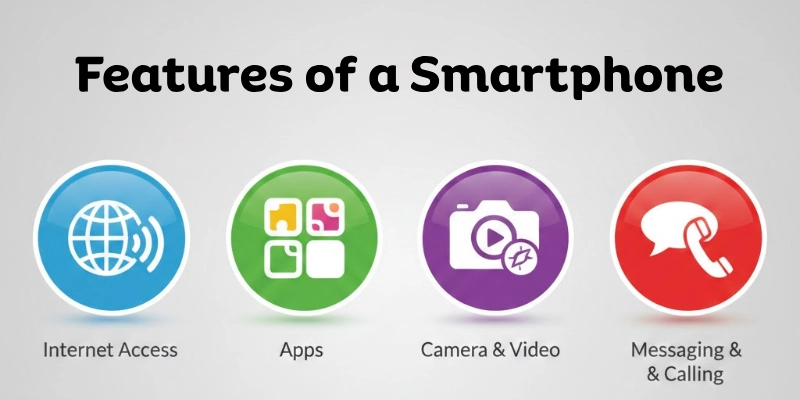
Here are the main smartphone functions:
- Internet Access: Browse websites, use social media, and stay connected.
- Apps: Install apps for games, learning, banking, and more.
- Camera & Video: Take high-quality photos and record videos.
- GPS & Maps: Get directions and find locations easily.
- Messaging & Calling: Send texts, make voice calls, or video chat.
These smartphone capabilities turn your device into a powerful mini-computer. Using small icons or images for each feature can make it easier to understand.
Advantages and Disadvantages of Smartphones
Smartphones are very useful, but they also have some drawbacks. These smartphone pros and cons help you understand the real-life impact of using a smartphone. Knowing the advantages and disadvantages of smartphones makes it easier to use them wisely.
Here’s a clear comparison:
| Pros | Cons |
| Easy communication via calls & messages | Can cause addiction or distraction |
| Access to internet & apps | Expensive for high-end models |
| Cameras for photos and videos | May affect health (eye strain, sleep) |
| GPS & navigation | Privacy and security risks |
| Learning and working on the go | The battery drains quickly |
How to Choose the Right Smartphone?
Choosing the best smartphone doesn’t have to be hard. Here are some simple tips from a smartphone buying guide:
- Budget: Decide if you want an affordable or premium phone. Don’t spend more than you need.
- Operating System: Choose Android for flexibility or iOS for a smooth, secure experience.
- Battery Life: Look for a long-lasting battery if you use your phone all day.
- Camera Quality: Pick a phone with a good camera if you love taking photos and videos.
- Storage & RAM: More storage and RAM are better for apps, games, and media.
Knowing how to choose a smartphone helps you pick a device that fits your lifestyle and makes your life easier.
| Tip: |
|---|
|
Choose a smartphone that matches your daily needs, not just for looks! |
Uses of Smartphones in Daily Life
Smartphones are very useful in our everyday lives. These smartphone applications show how a smartphone in daily life has become an important tool for learning, work, and fun.
Here are the main uses of smartphones:
- Communication: Make calls, send messages, and emails easily.
- Social Media: Stay connected on Instagram, Facebook, TikTok, and more.
- Education: Attend online classes, do research, and complete assignments.
- Work: Join meetings, send emails, and use productivity apps.
- Entertainment: Watch movies, listen to music, and play games.
For example, students use smartphones to attend online classes and submit homework.
Future of Smartphones
The future of smartphones looks exciting with many new technologies coming soon. These developments show how modern smartphone technology and AI smartphones will make our daily lives easier, more fun, and more connected.
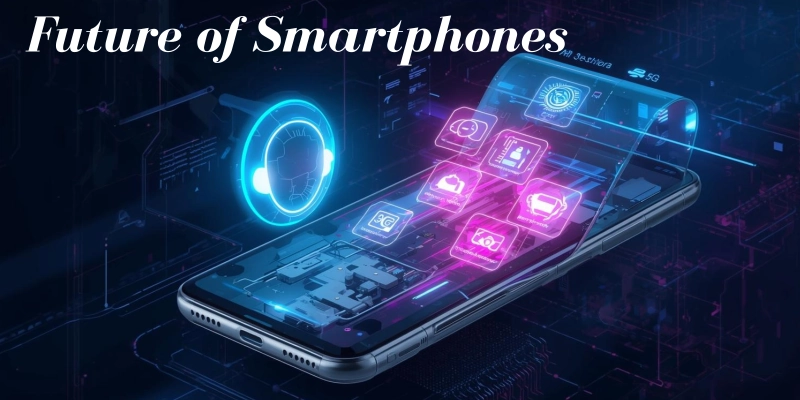
- AI Integration: Smart assistants like Siri or Google Assistant will become even smarter, making your phone more helpful.
- Foldable and Flexible Displays: Phones with foldable screens will be more portable and versatile.
- Better Cameras & AR: Cameras will improve, and augmented reality (AR) will let you interact with virtual objects.
- Faster Processors & 5G: Modern smartphones will be faster and support high-speed 5G internet.
Conclusion
In short, a smartphone is a powerful mobile device that does much more than just make calls and send messages. It helps us communicate, learn, work, and enjoy entertainment every day.
Smartphones have become small computers in our pockets, keeping us connected, informed, and entertained wherever we go. Understanding the importance of smartphones in daily life helps us use them wisely.
This smartphone summary shows how modern technology has made our lives easier, and that’s why knowing about smartphones is so useful.
FAQs
Have questions about smartphones? Check out these FAQs to learn everything you need to know!
Not all smartphones are Android phones. Android is one type of operating system used in many smartphones. Other smartphones, like iPhones, use iOS instead.
A smartphone is a mobile device that can make calls, send messages, access the internet, and run apps. It is more advanced than a basic mobile phone. In simple words, it is a small computer you carry in your pocket.
A smartphone is also called a mobile computer or an advanced mobile phone. It combines phone functions with computer-like features. Many people just call it a “phone” for short.
A phone becomes a smartphone when it can run apps, access the internet, and perform tasks like a mini-computer. It usually has a touchscreen and advanced software. Basic phones without these features are not smartphones.
A smartphone is a mobile computing device. It is portable and can perform many functions like a computer. It combines communication, entertainment, and productivity tools in one device.
Smartphones help us communicate, learn, work, and entertain ourselves. They provide internet access, apps, cameras, and navigation. Overall, they make daily life easier and more connected.
The basics of a smartphone include a touchscreen, battery, processor, camera, and sensors. It also needs an operating system and apps to work properly. These parts make the phone functional for everyday tasks.
The first smartphone was the IBM Simon, released in 1994. It could make calls, send messages, and run simple apps. It was the start of modern smartphones that we use today.
Smartphones mainly use Android or iOS as their operating systems. Android is used by many brands, while iOS is exclusive to Apple devices. These systems control apps, hardware, and phone functions.
IBM created the first touchscreen phone called Simon in 1994. It had a touchscreen interface for dialling and apps. This invention started the era of smartphones with touchscreens.




- Be Respectful
- Stay Relevant
- Stay Positive
- True Feedback
- Encourage Discussion
- Avoid Spamming
- No Fake News
- Don't Copy-Paste
- No Personal Attacks
- Be Respectful
- Stay Relevant
- Stay Positive
- True Feedback
- Encourage Discussion
- Avoid Spamming
- No Fake News
- Don't Copy-Paste
- No Personal Attacks
