What is a Power Bank & How Does it Work?
Published: 19 Dec 2025
Have you ever seen your phone battery die when you were outside? Have you ever needed your phone, but there was no charger or electricity nearby? This problem happens to many people today because we use phones and gadgets all the time.
A power bank is a small device that stores power. You can carry it with you and use it to charge your phone anytime and anywhere. People use power banks because phones and gadgets need to be charged all the time, even when we are not at home.
What is a Power Bank?
It is a small device that stores electrical energy so you can use it later. You can carry it in your bag or pocket and use it when your phone battery is low. It helps when there is no electricity, no wall socket, or no charger nearby.

This device is very useful for daily life, travel, and emergencies.
- It stores power inside its battery for later use.
- It helps charge phones, tablets, earphones, and small gadgets.
- It is easy to carry because it is small and lightweight.
- It works anywhere, even without electricity.
- It is useful during travel, power cuts, and outdoor activities.
How is a Power Bank Different from a Charger?
Many people think both are the same, but they work in very different ways. One stores electricity so you can use it anytime, while the other needs to be connected to a wall socket to work.
This makes them useful in different situations.
- A power bank stores electricity inside its battery.
- A charger does not store power and needs a power socket.
- A charger works only when it is plugged into electricity.
- A stored-energy device can charge your phone anywhere.
- A charger cannot work during travel or power cuts.
Example:
When you are traveling in a bus or train, and your phone battery is low, you can charge it using a stored-energy device. A normal charger will not work because there is no electricity plug.
How a Power Bank Works?
A power bank is like a small portable battery. It stores electricity and gives power to your phone or gadgets when needed.
- Storing Power:
The device stores electricity in its internal battery. You first charge it using a wall charger or USB port. Once the battery is full, it is ready to give power to other devices. - Charging Devices:
When your phone or gadget needs power, the stored energy moves from the device to your phone through a cable. This way, your phone can work even without a wall socket. - Input and Output Ports:
These are the holes on the device that let electricity flow in and out. One port charges the device itself, while the other sends power to your phone or gadget.
Input port: This is used to charge the device itself.
Output port: This is used to send electricity to your phone or gadget.
| Tip: |
|---|
|
Think of it as a small portable battery that saves power for later. You carry it, and it gives electricity whenever your phone runs low. |
Types of Power Banks
There are different types of these portable chargers, each designed for a specific need. Some are simple for daily use, while others are faster or can even use sunlight.

Here are some types of a power bank.
- Standard:
Basic models are used for normal phone charging every day. - Fast Charging:
These chargers fill your phone battery much quicker than normal ones. - Wireless:
Charge your phone without using any cables. - Solar:
Use sunlight to recharge, perfect for travel or outdoor activities.
Example:
If you are traveling and don’t have electricity, a solar charger can give your phone power using sunlight.
Features of a Power Bank
These portable chargers come with different features that make them useful for daily life. Some store more power, some are faster, and some are safer to use.
- Battery Capacity (mAh):
mAh shows how much electricity the device can store. Higher numbers mean it can charge your phone more times before running out. - Number of Ports:
Some devices have more than one port, so you can charge two or more gadgets at the same time. - Charging Speed:
Normal chargers take longer, while fast charging fills your phone quickly. Faster devices are useful when you are in a hurry. - Size and Weight:
Small and light models are easy to carry in your bag or pocket. Big ones store more power but are heavier. - Safety Features:
Good chargers protect your devices from overcharging, short circuits, and overheating. This keeps your phone safe while charging.
Uses of a Power Bank
These portable chargers are very useful in daily life. They help keep your devices running when there is no wall socket or electricity.
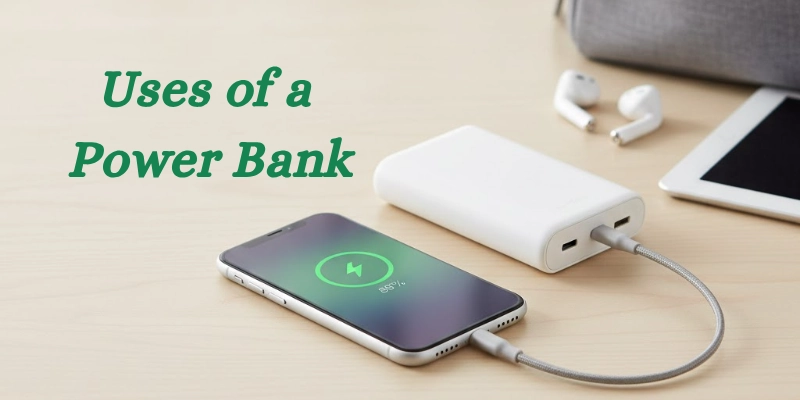
Here are some uses of a power bank.
- Charging Smartphones:
You can charge your smartphone anytime, anywhere, even when you are outside or traveling. - Charging Tablets and Earbuds:
Small gadgets like tablets, wireless earphones, and smartwatches can also get power from it. - Travel and Outdoor Use:
It is perfect for long trips, camping, or outdoor activities where electricity is not available. - Emergency Situations:
During power cuts or unexpected situations, it keeps your phone working so you can call or use maps.
Example:
If the electricity goes off at home, you can charge your phone using a portable charger and stay connected.
Advantages and Disadvantages of a Power Bank
Portable chargers have many benefits, but they also have some limitations. This table helps you quickly see the good and not-so-good points.
| Advantages | Disadvantages |
| Small and easy to carry | Takes time to recharge |
| Useful during travel | Limited battery life |
| Can charge multiple devices | Can be heavy |
| Works without electricity | Cheap models can be unsafe |
| Simple to use | Some models lose power over time |
Tips for Choosing the Right Power Bank
Choosing the right portable charger can make a big difference. Look at your device’s needs, charging speed, and safety before buying.
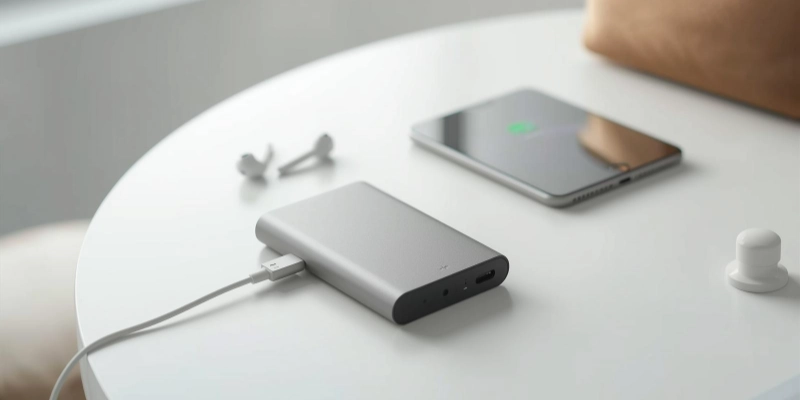
- Higher capacity stores more electricity, so your phone can charge multiple times.
- Fast-charging models fill your devices quickly, saving time during travel or busy days.
- Reliable brands ensure quality and prevent problems like overheating or short circuits.
- Look for overcharge, overheat, and short-circuit protection to keep your devices safe.
- Make sure the charger can support your phone, tablet, or other gadgets.
| Tip: |
|---|
|
For beginners, a 10,000 mAh portable charger is a good choice; it is not too big and can fully charge most phones 2–3 times. |
Power Bank vs Charger
Both keep your devices powered, but they work in different ways. This comparison helps beginners understand when to use each.
| Feature | Portable Charger | Wall Charger |
| Stores Power | Yes | No |
| Works Without Outlet | Yes | No |
| Charging Speed | Normal or Fast | Usually Normal |
| Portability | Easy to carry | Must stay near the socket |
| Best For | Travel, outdoor use | Home or office |
Example:
If you are on a bus and your phone battery is low, a portable charger can give power. A wall charger will not work without electricity.
Conclusion
In today’s world, small portable chargers are very useful for keeping phones and gadgets running anytime and anywhere. They come in different types, have useful features, and can help during travel, outdoor activities, or emergencies. Choosing the right one depends on your device needs, battery capacity, and safety features, making life easier and keeping you connected when you need it most.
Stay charged and share your thoughts in the comments below!
FAQs
Check out the FAQs to clear all your doubts and learn more!
It stores electricity so you can charge your devices anywhere. It is useful when there is no wall socket. It keeps phones, tablets, and other gadgets running on the go.
Yes, they must be charged before use. You can charge them with a wall charger or a USB port. Once full, they are ready to give power to your devices.
Most models work with popular phones and gadgets. You just need a compatible cable or connector. Some older or very new devices may need specific support.
It depends on the battery capacity and your device size. Higher capacity chargers can give multiple full charges. Smaller ones may last only for one full charge.
Overcharging, using apps while charging, and extreme temperatures reduce battery life. Constantly draining it to zero also harms it. Gentle use and proper charging extend battery health.
Check battery capacity, number of ports, and charging speed. Look for safety features like overcharge and short-circuit protection. Choose a trusted brand that fits your device needs.
You can use a wall charger, USB port, or solar charger, depending on the model. Check the input rating to match the correct voltage and current. Using the proper charger ensures faster and safer charging.
Most portable chargers last 2–3 years with regular use. The battery capacity decreases gradually over time. Proper use and avoiding overcharging can extend its life.
It can charge smartphones, tablets, earphones, smartwatches, and other small gadgets. Any device that supports USB charging usually works. High-power devices may need larger or specialized models.
Yes, good models automatically stop when your device is full. This prevents overcharging and protects your battery. Some cheaper models may not have this feature, so check before use.






- Be Respectful
- Stay Relevant
- Stay Positive
- True Feedback
- Encourage Discussion
- Avoid Spamming
- No Fake News
- Don't Copy-Paste
- No Personal Attacks
- Be Respectful
- Stay Relevant
- Stay Positive
- True Feedback
- Encourage Discussion
- Avoid Spamming
- No Fake News
- Don't Copy-Paste
- No Personal Attacks
