What is a Mini Projector? Uses, Benefits & Features
Published: 9 Dec 2025
Have you ever wished you could watch movies anywhere, even without a TV? A mini projector makes this possible. It is a small and portable device that can project videos, photos, or presentations onto a wall or screen.
In this guide, you will learn what a mini projector is, how it works, the different types, common uses, benefits, and simple tips for choosing the right one. This is a clear, beginner-friendly explanation to help you understand mini projectors easily.
What is a Mini Projector?
A mini projector is a small version of a regular projector. It is light, compact, and usually small enough to fit in your hand or backpack. Its main purpose is to give you portable entertainment, easy presentations, and simple learning support anywhere you go.
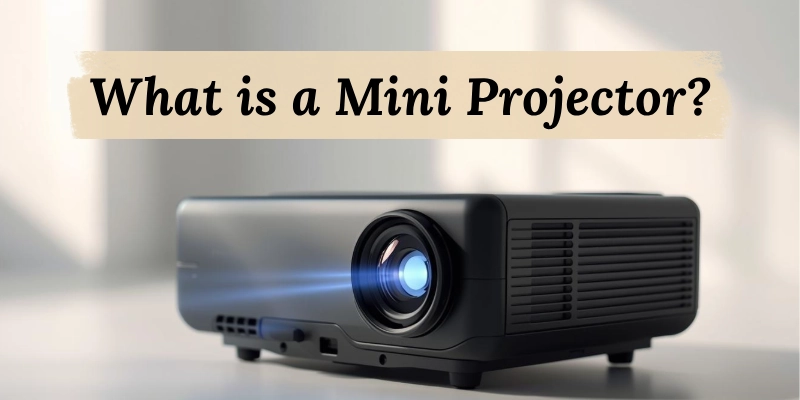
A mini projector can connect to your smartphone, laptop, or tablet, so you can project your videos or pictures instantly.
Example: You can use a mini projector to watch a movie on your bedroom wall.
How Does a Mini Projector Work?
A mini projector works by shining light through a small chip and lens system to display images or videos. It connects easily to phones, laptops, or tablets and can run on battery or power.
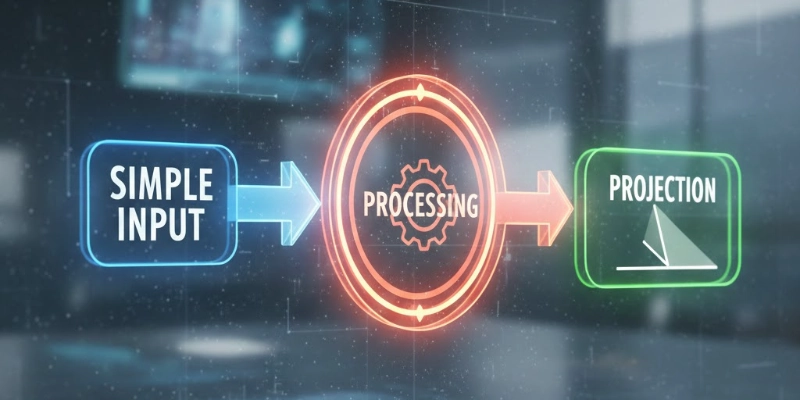
Here’s how they work:
- Light Source: They use LED or laser lights to make the image bright.
- Lenses: The lenses focus and project the image onto a wall or screen.
- Internal Chip / Imaging Technology: Inside, chips like LCD, DLP, or LED create the pictures you see.
- Connection System: They connect to phones, laptops, or tablets via HDMI, USB, Bluetooth, Wi-Fi, or screen mirroring.
- Power Source: Some run on batteries, while others plug into power.
Types of Mini Projectors
Mini projectors come in different types to fit various needs, from home entertainment to travel. Each type varies in size, brightness, and how you can use it.
| Type | Size | Brightness | Best Use |
| LED Mini Projector | Medium | High | Home, office |
| Pocket / Pico Projector | Very Small | Medium | Travel, casual use |
| Portable Battery Projector | Small-Medium | Medium-High | Outdoor, travel |
| Smartphone-Compatible Projector | Small | Medium | Phone streaming |
Features of Mini Projectors
Mini projectors have key features that affect performance and usability. Knowing them helps you pick the right one for your needs.
- Brightness (Lumens): Higher lumens give a clearer and brighter image.
- Resolution: Common resolutions are 480p, 720p, and 1080p for sharper images.
- Battery Life: Portable models usually last 1–3 hours on a single charge.
- Speaker Quality: Some have built-in speakers; for better sound, external speakers can be used.
- Connectivity: Connect via HDMI, Bluetooth, or Wi-Fi for easy streaming.
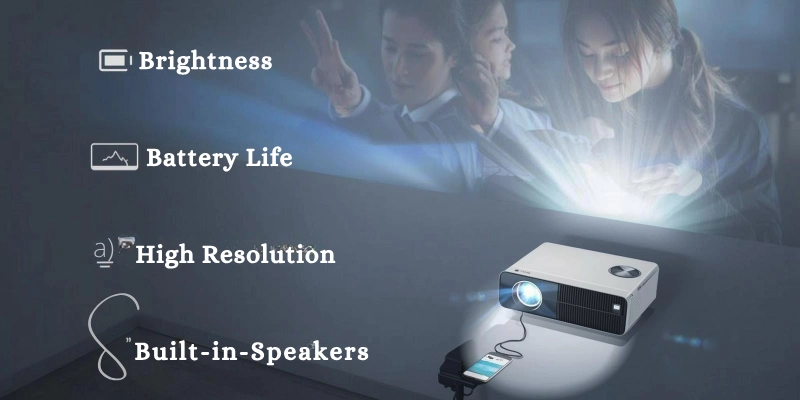
Use this checklist to pick the perfect mini projector for your needs!
- Check the brightness (lumens) for your room size.
- Choose a resolution that fits your needs.
- Consider battery life for portability.
- Test speaker quality or plan for external audio.
- Ensure the connectivity options match your devices.
Uses of Mini Projectors
Mini projectors are versatile and can be used for fun, work, learning, and outdoor activities. They let you enjoy movies, games, presentations, and lessons anywhere.
- Watching Movies: Great for bedrooms, travel, or backyard setups.
- Presentations and Office Use: Perfect for business meetings, quick demos, and presentations.
- Gaming: Connect to consoles like PS, Xbox, or Switch for a bigger gaming experience.
- Education: Teachers can use them in classrooms to make learning interactive.
- Outdoor Activities: Ideal for camping trips or outdoor movie nights.
Example: A family enjoying a movie outside using a mini projector.
Advantages of Mini Projectors
Mini projectors are compact and user-friendly devices that make entertainment and presentations easy anywhere. They are affordable, portable, and work well with small spaces and smartphones.
- Mini projectors are portable and lightweight, making them easy to carry anywhere.
- They are simple to use, even for beginners.
- Affordable options are available for different budgets.
- They work seamlessly with smartphones for easy streaming.
- Mini projectors are ideal for small spaces, providing a big-screen experience without taking up much room.
Disadvantages of Mini Projector
Mini projectors are convenient but have some limits, like lower brightness and weaker sound. They work best in small, dark rooms and may not suit large spaces.
- Mini projectors have lower brightness compared to full-size projectors.
- They are not ideal for large rooms, as the image may appear small or dim.
- Built-in speakers can be weak, so external speakers might be needed for better sound.
- Image quality depends on how dark the room is, with brighter rooms reducing clarity.
Tips for Choosing the Right Mini Projector
Choosing the right mini projector makes a big difference in your experience. Focus on brightness, resolution, battery, and compatibility to get the best value.
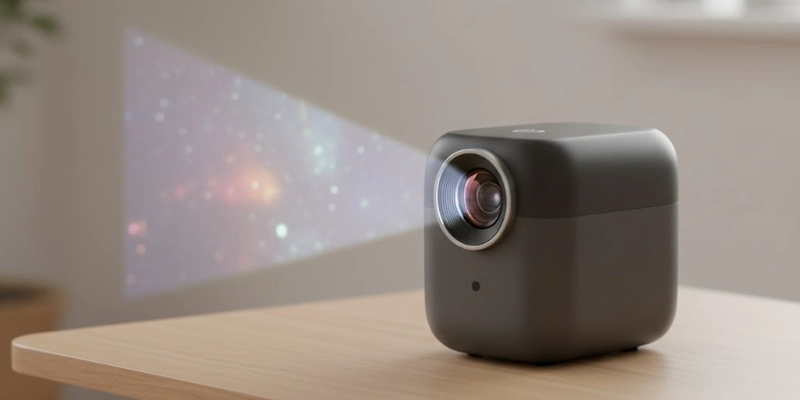
- Check lumens (at least 200–400 for dark rooms).
- Prefer 720p or higher resolution for clear images.
- Look for long battery life for portability.
- Ensure it works with your phone or laptop.
- Check speaker quality for good sound.
- Compare features to price before buying.
Future of Mini Projectors
Mini projectors are evolving to become brighter, smarter, and more portable. New technology will make them easier to use with wireless connections, smart features, and longer battery life.
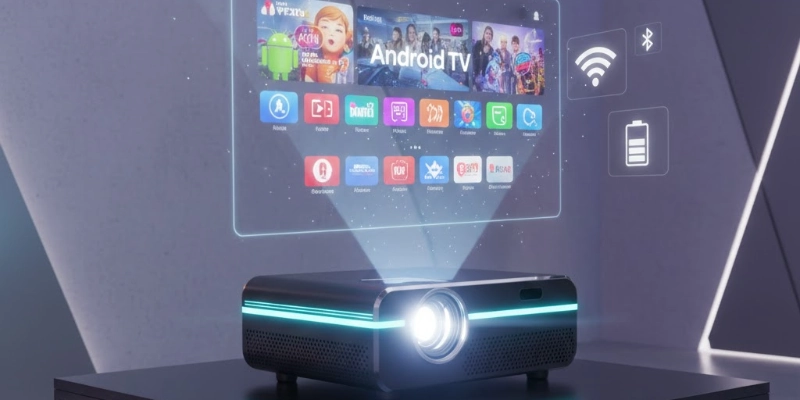
- Smaller and brighter LED technology
- Better wireless connections for seamless streaming
- Built-in smart OS like Android TV
- Improved battery-powered models for portability
Conclusion
In this guide, we’ve learned all about mini projectors, from what they are and how they work to their types, features, uses, and tips for choosing the right one. We also explored their advantages, limitations, and what the future holds. Now, you can easily pick a mini projector that fits your needs for movies, gaming, presentations, or learning, and enjoy big-screen experiences anywhere.
Grab your mini projector today and bring big-screen fun anywhere you go!
FAQs
Got questions? Check our FAQs to find all the answers about mini projectors!
A mini projector shows videos, movies, pictures, or presentations on a wall or screen from your phone, laptop, or tablet.
Yes, you can watch TV shows or movies on a mini projector if you connect it to a streaming device, cable box, or your phone.
No, mini projectors are energy-efficient and use very little electricity compared to full-size projectors or TVs.
The three main types are LCD (uses liquid crystals), DLP (uses tiny mirrors), and LED (uses light-emitting diodes).
Common mistakes include using it in a bright room, placing it too close to the wall, not checking compatibility with devices, and ignoring battery limits.
Most mini projectors can safely run 2–4 hours continuously, depending on the model and battery.
The main purpose is to provide portable entertainment or display content anywhere without needing a full-size TV or projector.
Yes, you can play videos, presentations, or games stored on your phone, laptop, USB, or memory card without internet.
You need a flat wall or screen, a device to connect (phone, laptop, or USB), and sometimes a power source or charged battery.



- Be Respectful
- Stay Relevant
- Stay Positive
- True Feedback
- Encourage Discussion
- Avoid Spamming
- No Fake News
- Don't Copy-Paste
- No Personal Attacks
- Be Respectful
- Stay Relevant
- Stay Positive
- True Feedback
- Encourage Discussion
- Avoid Spamming
- No Fake News
- Don't Copy-Paste
- No Personal Attacks
