Mainframe Computer: Clear Beginner’s Guide
Published: 3 Oct 2025
Computers are everywhere today, but some organizations like banks, airlines, and governments need super-powerful machines to handle massive amounts of data.
Unlike normal computers, they are designed for speed, reliability, and heavy workloads. In today’s digital world, mainframes are still important for managing transactions, records, and services.
In this article, we will explore what a mainframe computer is, its history, uses, features, benefits, drawbacks, and future.
What is a Mainframe Computer?
A mainframe computer is a large-scale computer designed for big organizations to process huge amounts of data at high speed. In simple words, it is a powerful system that supports many users and applications at the same time. This is the basic definition of a mainframe computer.
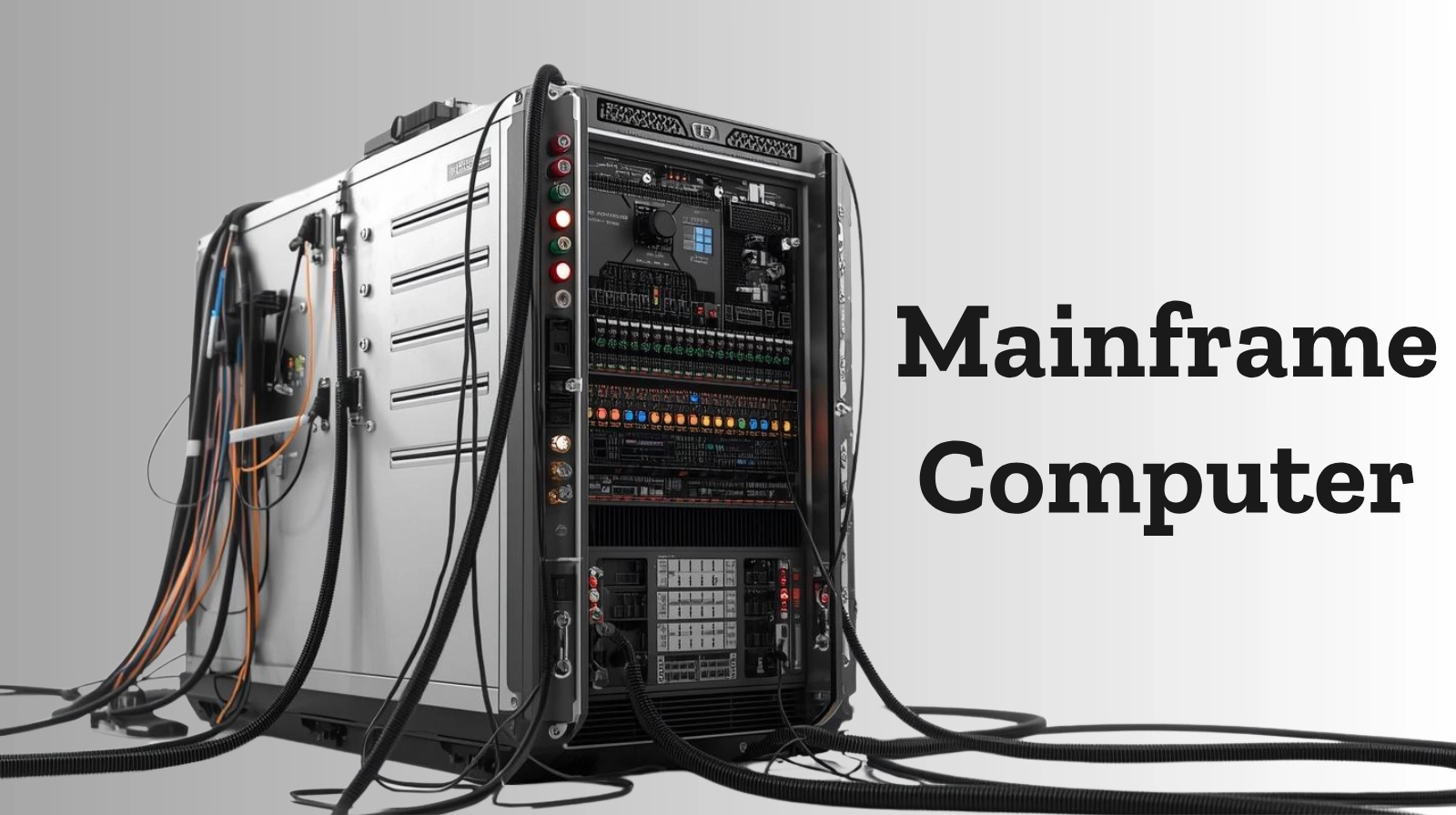
The difference between a personal computer and a mainframe is clear: a personal computer is built for one person’s tasks, like browsing or gaming, while a mainframe handles centralized computing for thousands of users, such as banking, airlines, and government records.
It is called a “mainframe” because, in the early days, the main hardware was housed in a large central frame. Over time, the name stuck.
The basic working concept of a mainframe is parallel processing, meaning it can complete many tasks at once without slowing down. This makes it reliable for critical services where speed and accuracy are essential.
History of Mainframe Computers
Mainframe computers have a long and important journey in the world of technology. From their invention in the 1940s to the advanced IBM systems we see today, they have shaped how businesses and governments manage data.
The evolution of mainframe computers shows how they moved from bulky machines to powerful, compact systems that still play a vital role in modern IT.
Invention and Early Use:
- The first mainframe computer appeared in the 1940s.
- Used mainly by governments, the military, and research centers.
- Very large in size and costly to operate.
IBM Mainframe Computers (Pioneers):
- IBM mainframe systems became industry leaders.
- IBM System/360 (1960s) allowed multiple applications on one machine.
- Helped businesses grow with reliable data processing.
Evolution Over Decades:
- Shifted from vacuum tubes to transistors, then to modern processors.
- Became smaller in size but more powerful in speed and storage.
- Improved security and reliability over time.
Importance in Modern IT:
- Still widely used in banking, airlines, healthcare, and government.
- Handle millions of secure transactions daily.
- Remain critical for large-scale computing and centralized systems.
Characteristics of Mainframe Computers
Mainframe computers are known for their strong design and unique abilities that make them different from personal computers.
These machines are built to manage heavy workloads, keep data safe, and support large organizations. The key features of mainframe computers are listed below.
- Mainframes can handle millions of instructions per second.
- Designed for large-scale computing and massive data processing.
- A core part of mainframe architecture is parallel processing, which speeds up work.
- Thousands of users can work on the same system at the same time.
- Supports multiple applications without slowing down.
Examples of Mainframe Computers
Mainframes come in different models, but some are more popular because of their wide use in industries. The most well-known examples are from IBM zSeries, which are considered the gold standard in mainframe technology.
Below are some easy-to-understand examples of mainframe systems.
- IBM Z Series (zSeries): Most popular mainframes, including IBM z13, z14, and z15, are used in banking, airlines, and large companies.
- IBM System/360 & 370: Early models that set the standard for mainframe computing.
- IBM zEnterprise: Modern systems built for heavy workloads and hybrid computing.
While a personal computer is like a family car, a mainframe is like a huge train carrying millions of passengers at once, fast, safe, and reliable.
Applications / Uses of Mainframe Computers
Mainframe computers are widely used in industries that need to process huge amounts of data securely and quickly. They keep critical systems running without failure.
- Banking and Finance: The most common use of a mainframe computer is handling millions of secure transactions daily (mainframe in banking).
- Airline Industry: Manages ticket booking, seat reservations, and flight schedules.
- Government: Used for census data, tax records, and defense systems.
- Healthcare: Stores and protects patient records for hospitals and clinics.
- Big Business: Large companies use mainframes to manage massive databases and operations.
Benefits vs Limitations of Mainframe Computers
Mainframe computers are powerful and reliable, but they also come with high costs and complexity. Here’s a quick comparison of the strengths and weaknesses of mainframe computers.
| Benefits | Limitations |
| A mainframe can process data very quickly. | It is very expensive to buy and maintain. |
| A mainframe can handle very large databases and millions of transactions. | It needs highly trained staff to operate. |
| A mainframe keeps sensitive information safe with strong security. | It requires a lot of physical space for setup. |
| A mainframe works reliably 24/7 without downtime. | It is not flexible for small or simple tasks. |
| A mainframe can run many applications at the same time. | It consumes a large amount of electricity. |
Difference Between Mainframe and Supercomputer
People often get confused between mainframes and supercomputers. Both are powerful, but they serve different purposes. This table explains the key differences between a mainframe and a supercomputer in easy words.
| Mainframe Computer | Supercomputer |
| A mainframe is used for business tasks like banking, airlines, and government records. | A supercomputer is used for scientific research, weather forecasting, space studies, and complex calculations. |
| It is very fast at handling millions of transactions at once. | It is extremely fast at solving one huge problem very quickly. |
| Supports thousands of users at the same time for centralized computing. | Usually used by a small group of scientists or researchers. |
| It is very expensive, but it is designed for organizations needing secure data management. | The costs are extremely high because of advanced technology and massive processing power. |
Future of Mainframe Computers
The future of mainframe computers looks strong as they continue to adapt to modern technology. They remain important for cloud, AI, and big data.
Role in Cloud Computing and AI:
- Mainframes are being connected to the cloud for better data access.
- AI tools are being added to make systems smarter and faster.
- Shows the growth of the mainframe in cloud computing.
IBM’s Modern Developments:
- IBM is building modern mainframe systems like IBM z15 and z16.
- These models focus on security, speed, and hybrid cloud support.
- They are designed to work with today’s digital economy.
Predictions for Big Data and Security:
- Mainframes will manage larger and more complex data sets.
- They will play a key role in protecting data from cyber threats.
- Likely to stay the backbone of industries that need safe and fast computing.
Conclusion
Here we discovered mainframe computers. Mainframe computers are large, powerful systems built for heavy data processing. They remain important in banking, airlines, government, and other industries where speed and security matter most.
Even in the age of cloud and AI, mainframes continue to play a trusted role in business and technology.
Mainframes still power the world. Discover what’s next in tech.
FAQs
Got questions? Let’s clear them up in the FAQs below.
Mainframe computers can process a lot of data and support many users at once. They are reliable, secure, and work continuously without failing.
Mainframes mainly use languages like COBOL, JCL, and Assembly. They also support modern languages such as Java, C, and Python.
Yes, mainframes are still used today by banks, airlines, governments, and big companies. They remain important for handling large data and secure transactions.
Another name for a mainframe is a big iron computer. It is called this because of its large size and powerful performance.
The most expensive type of computer is the supercomputer. It is designed for extremely fast calculations and complex scientific research.
Mainframe computers are used in banks, airlines, hospitals, and government offices. They help manage big databases, transactions, and important records safely.
Mainframes are used today by banks, insurance companies, airlines, government agencies, and large businesses. They rely on them to manage big databases, secure transactions, and critical operations.





- Be Respectful
- Stay Relevant
- Stay Positive
- True Feedback
- Encourage Discussion
- Avoid Spamming
- No Fake News
- Don't Copy-Paste
- No Personal Attacks
- Be Respectful
- Stay Relevant
- Stay Positive
- True Feedback
- Encourage Discussion
- Avoid Spamming
- No Fake News
- Don't Copy-Paste
- No Personal Attacks
